
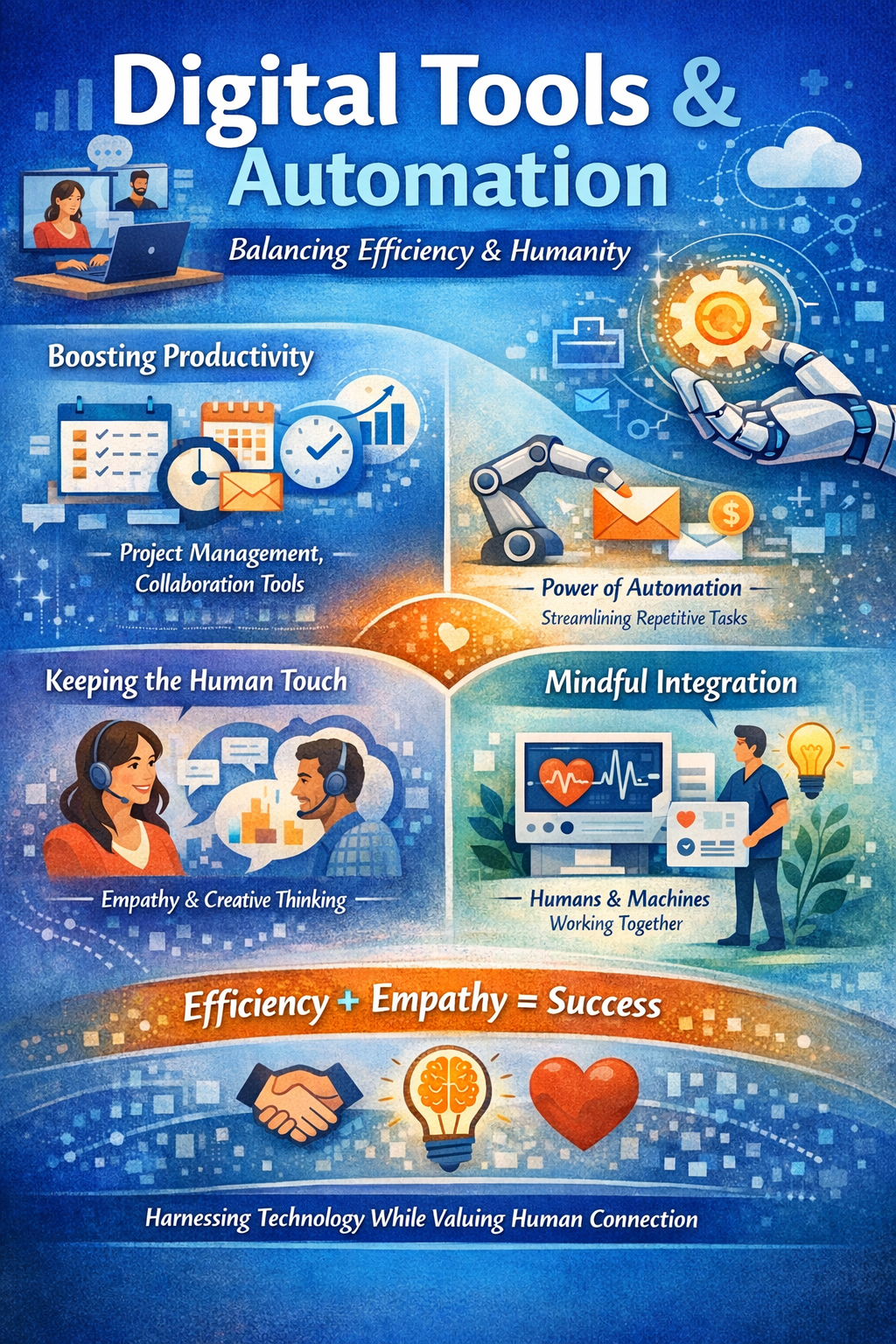
In today’s fast-paced world, digital tools and automation have become essential elements of how we work, communicate, and manage daily life. From project management platforms like Trello and Asana to AI-driven analytics and automated customer support, technology has transformed the way organizations operate. However, amid all these advancements, a crucial question emerges: how do we balance efficiency with the human touch that keeps interactions meaningful?
The Rise of Digital Tools
Over the last decade, businesses and individuals alike have embraced digital tools to streamline operations. Tools for communication, scheduling, data analysis, and collaboration allow teams to work faster and smarter. For instance, cloud-based platforms like Google Workspace or Microsoft 365 enable real-time collaboration across continents. This connectivity has broken down barriers that once limited productivity to physical office spaces.
Similarly, tools like Slack or Microsoft Teams help manage communication without the chaos of endless emails. Automation within these platforms—such as reminders, task assignments, or message scheduling—reduces repetitive work, freeing human attention for tasks that demand creativity and critical thinking.
Automation: Efficiency and Consistency
Automation goes hand-in-hand with digital tools, taking over repetitive, time-consuming tasks that do not require nuanced human judgment. Automated invoicing, email marketing campaigns, inventory updates, and data entry are just a few areas where automation saves hours, even days, of human labor. Beyond efficiency, automation ensures consistency. Machines don’t get tired, distracted, or forgetful—they perform repetitive processes with the same precision every time.
For businesses, this means fewer errors, faster service, and the ability to scale operations without proportional increases in staffing. For individuals, automation can manage personal routines like bill payments, calendar scheduling, or smart home controls, creating more time for meaningful activities.
Preserving the Human Element
Despite the clear benefits of digital tools and automation, over-reliance on technology can erode the human touch. Relationships, empathy, and personal intuition are aspects of work and life that machines cannot replicate. Customer service, for instance, benefits from automation in ticket routing and FAQs, but nuanced problem-solving still requires a human operator. A chatbot can provide answers, but a compassionate human voice reassures a frustrated customer in ways that AI cannot fully emulate—yet.
The human element also plays a critical role in creativity. Automation can assist with data analysis or generate ideas, but it cannot replace the spark of innovation that comes from human experience, cultural understanding, and emotional insight. Striking the right balance involves leveraging digital tools to handle routine tasks while allowing humans to focus on creativity, strategy, and empathy-driven interactions.
Integrating Technology Mindfully
The most successful integration of digital tools and automation happens when technology complements, rather than replaces, human effort. Organizations that embrace this mindset often implement “human-in-the-loop” systems, where automation handles repetitive tasks, and humans make the final judgment calls. In healthcare, for example, AI can analyze medical images, but doctors interpret results and consider patient history before making treatment decisions. Similarly, in marketing, automation can segment audiences and schedule posts, but crafting authentic messages still requires a human touch.
For individuals, mindful integration means using digital tools to enhance productivity without letting technology dictate life. Setting boundaries, such as limiting notifications, automating only repetitive chores, and preserving time for face-to-face interactions, ensures that technology serves humans—not the other way around.
The Future of Work and Human Collaboration
Looking ahead, digital tools and automation will continue to evolve, becoming more sophisticated and pervasive. AI-driven assistants, predictive analytics, and robotic process automation are already transforming industries like finance, logistics, and healthcare. While this may seem daunting, the future need not be feared. By focusing on collaboration between humans and machines, workplaces can achieve higher efficiency while nurturing innovation and empathy.
Education and training will play a crucial role in this transition. Upskilling employees to work alongside automation—developing critical thinking, emotional intelligence, and creativity—ensures that humans remain indispensable. The goal is not to compete with machines but to leverage their capabilities to enhance human potential.