
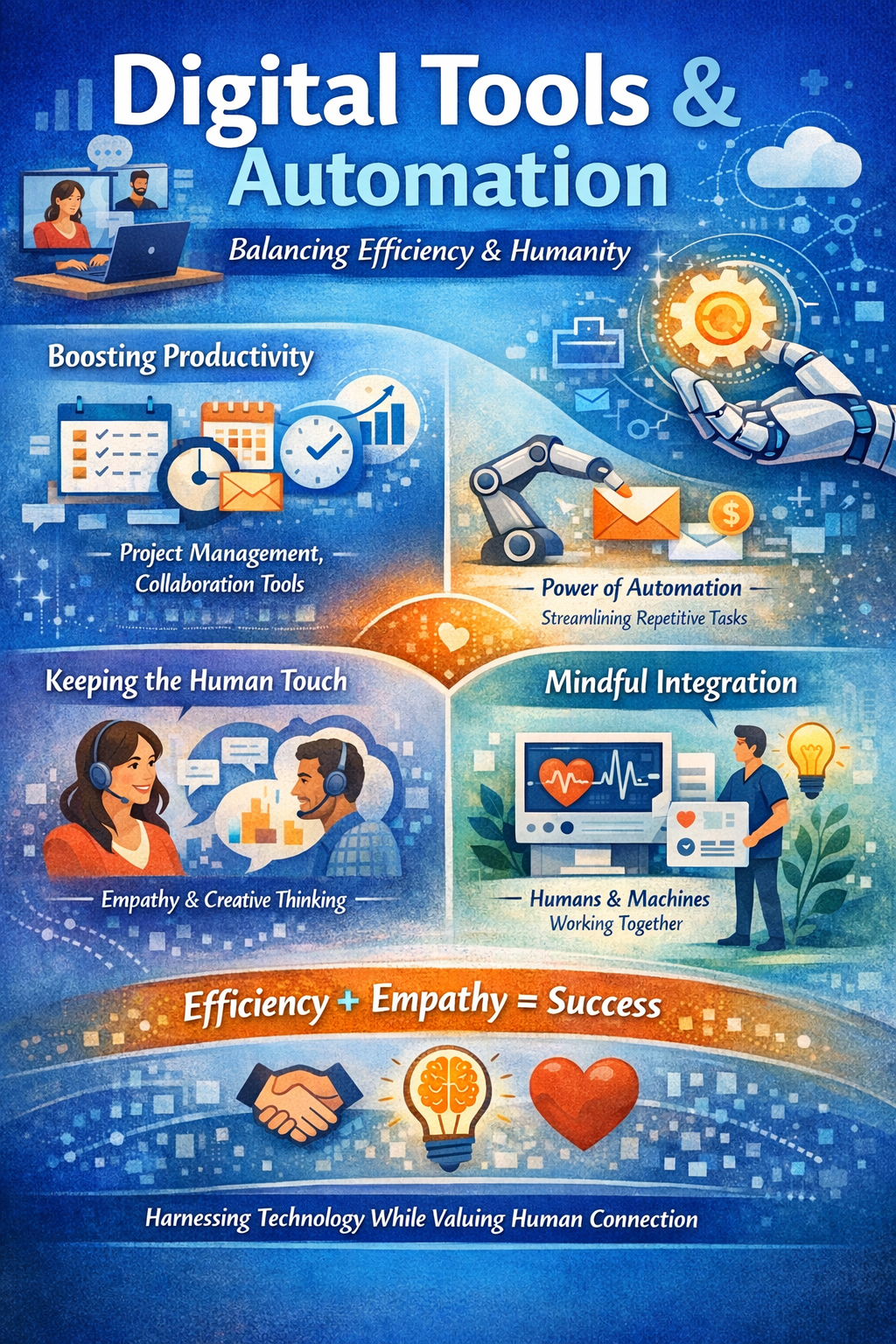
Digital tools and automation have steadily become integral to modern work environments. What was once considered a capability exclusive to large enterprises is now widely accessible to professionals, small businesses, and growing organizations across industries. This quiet integration is reshaping how work is planned, executed, and managed on a daily basis.
Automation now supports many routine functions such as scheduling meetings, managing email workflows, processing payments, and organizing data. These tools operate efficiently in the background, reducing manual intervention while ensuring accuracy and consistency. As a result, employees can allocate more time to high-value activities such as strategic planning, analysis, and creative problem-solving.
One of the most significant impacts of automation is the reduction of operational inefficiencies. Repetitive tasks that were once prone to human error are now standardized through automated systems. This leads to improved reliability, faster turnaround times, and better overall productivity. For businesses, it also translates into measurable cost savings and improved resource utilization.
Digital tools have also transformed collaboration within teams. Cloud-based platforms enable seamless communication and real-time document sharing, allowing teams to work effectively regardless of location. Clear task tracking and workflow visibility enhance accountability and ensure alignment across departments.
Concerns around automation often stem from the fear of losing human control over processes. In practice, automation enhances control by providing transparency, data-driven insights, and predictable outcomes. Rather than replacing human roles, these tools support decision-making and enable professionals to focus on responsibilities that require judgment, creativity, and interpersonal skills.
The transformation driven by digital tools and automation is gradual but impactful. By simplifying complex workflows and minimizing administrative burdens, organizations create more structured, efficient, and resilient work environments.
As the nature of work continues to evolve, digital tools and automation will remain essential enablers of sustainable growth. Organizations that adopt these technologies strategically are better positioned to improve performance, support their workforce, and remain competitive in an increasingly digital economy.